News
Queen Mathilde of Belgium Attended a Panel on Women’s Empowerment Organized by the Belgian Federal Ministry of Foreign Affairs and the Belgian Embassy and Hosted by ICI
- 11.05.2026
- News

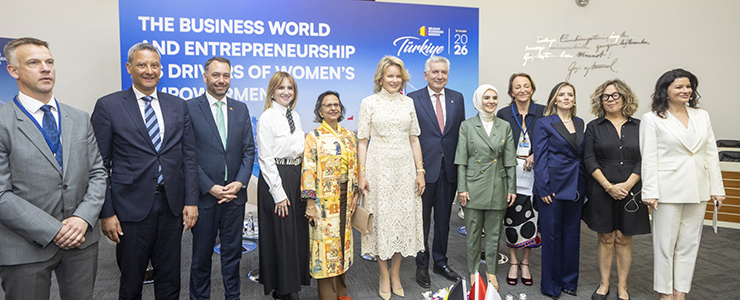
As part of Belgium’s economic mission in Türkiye, a panel titled “The Role of Business and Entrepreneurship in Women’s Empowerment” was organized by the Belgian Federal Ministry of Foreign Affairs and the Belgian Embassy. Dedicated to women’s empowerment, the event was held at the Odakule Fazıl Zobu Assembly Hall and hosted by the Istanbul Chamber of Industry (ICI).
The event brought together leaders, innovators, and change-makers, marking the first time in ICI history that such a high-status guest was hosted. Her Majesty the Queen Mathilde of Belgium delivered a speech at the event.
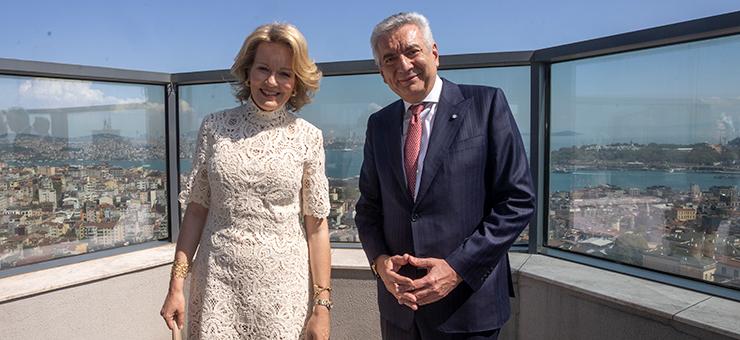
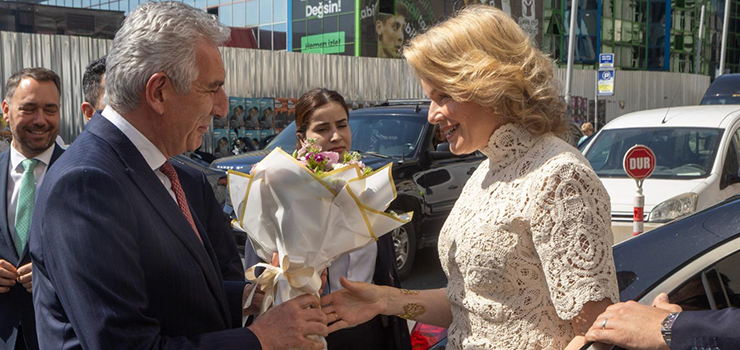
The organization began with an opening speech by ICI Chairperson Erdal Bahçıvan, and was also attended by Mahinur Özdemir Göktaş, Turkish Minister of Family and Social Services. Other attendants included ICI Vice Chair İrfan Özhamaratlı and Cemal Keleş, ICI Board Members Sultan Tepe (Treasurer), Celal Kaya, Hüseyin Çetin, and Dr. Faruk Sarı. The event laid the groundwork for an inspiring dialogue on topics such as strengthening women’s representation in the business world, promoting equal opportunities in the workplace, and the contribution of women’s leadership to economic growth.
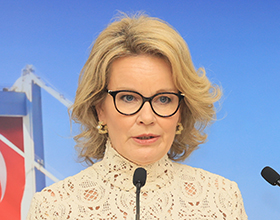
Queen Mathilde of Belgium
In her opening remarks at the event, Queen Mathilde of Belgium said:
“The purpose of an economic mission is to strengthen relationships by fostering contact among companies from different countries, to facilitate investments, and to share best practices. However, such a mission also offers an opportunity to reflect on what kind of economic model we wish to develop together and what roles the various stakeholders involved should assume. This context creates an ideal environment for exchanging ideas on the empowerment of women in the workplace. It is widely acknowledged—and even scientifically proven—that empowering women in their professional journeys strengthens the economy of the future, its resilience, and its capacity for innovation. After all, the entrepreneurs and leaders of the future are shaped by this understanding.
“In other words, when women are fully integrated into all levels of the economy, the entire society benefits from this. For this reason, it is highly meaningful to compare the measures taken by the business community, civil society, and public authorities in our two countries to support women’s presence in the economic sphere. With this in mind, drawing on the Belgian experience, I would like to share three thoughts of mine with you. First, women’s equal and meaningful participation in economic and political decision-making processes is a prerequisite for inclusive economic growth, innovation, and social resilience. The Belgian experience shows that equality is not achieved by chance; it is made possible through conscious and structural choices. If we wish to shape the future, we must act today. Second, the empowerment of women in the workplace cannot be separated from safe, respectful, and dignified working environments. Violence and harassment in the workplace—including gender-based violence—harm not only individuals but also erode trust, talent, and leadership potential within organizations.”
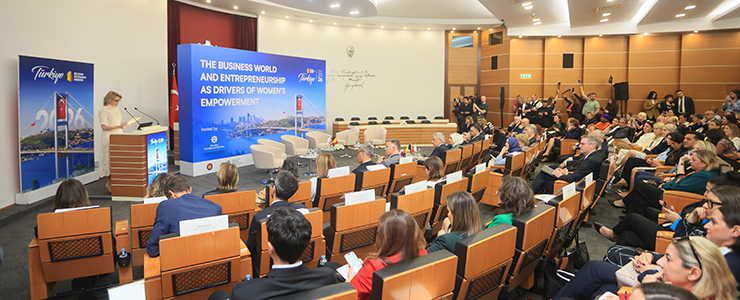
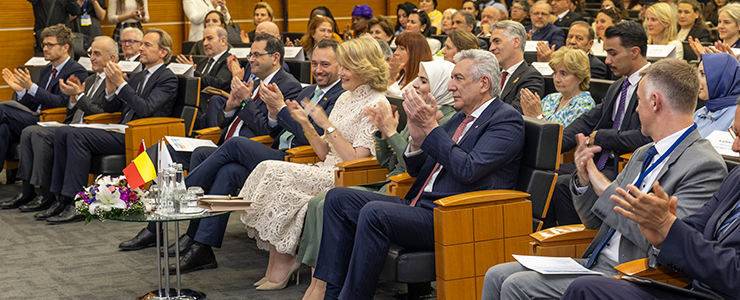
Following her remarks on women’s participation in decision-making processes and the importance of safe work environments, Queen Mathilde of Belgium also addressed the profound transformation in the labor market.
“The third key point I wish to address, following women’s participation in decision-making processes and the importance of safe work environments, is the profound transformation occurring in the labor market” said the Queen. “Digitalization, artificial intelligence, remote working, and the green transition are reshaping the way we work; and while creating new opportunities, they also bring new risks. These changes are not gender-neutral. Unless conscious and inclusive policy choices are made, they carry the risk of further entrenching existing inequalities, such as unequal access to skills, insecure employment, and the exacerbation of existing biases. A forward-looking labor market is one that makes women an active part of these transformations and offers them opportunities to become the leaders of the future. The path to achieving this lies in equal access to education, digital and technological skills, and lifelong learning.”
The Family and Social
Services Minister,
Mahinur Özdemir Göktaş
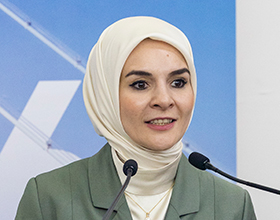
The Family and Social Services Minister, Mahinur Özdemir Göktaş stated in her opening remarks that women’s representation in the workforce is not merely an economic issue but also a strategic matter in terms of development and social welfare. Minister Göktaş said:
“The issue we are addressing today is not limited to women’s representation in the workforce. It is directly linked to the direction of development, the quality of production, the depth of social welfare, and the economic order we will leave for future generations. The global economy is being reshaped by digitalization, the green transition, artificial intelligence, new production technologies, and changes in global supply chains. In this new era, a country’s strength will no longer be determined solely by capital accumulation, market size, or natural resources. The true determinant will be the capacity to mobilize human resources, transform knowledge into value, and provide opportunities to all segments of society. Today, we know that entrepreneurship is one of the most critical areas shaping a country’s competitive strength.
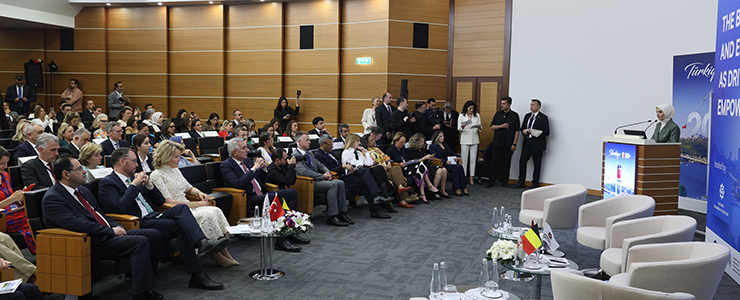
“Economies that support innovative ideas, facilitate access to financing, strengthen digital skills, and promote participation in networks generate higher added value. Women entrepreneurs, however, are at the very center of this transformation. Because when women start a business, they do not merely generate economic value; they also empower themselves, support local development, serve as role models for other women, and become a driving force for social development. In this context, the role of the business world and entrepreneurial ecosystems in empowering women is of vital importance. For these reasons, we view women’s participation in economic life as a strategic development issue. We believe that an economic structure that fully reflects women’s knowledge, skills, productivity, and leadership capacity will create a foundation for more resilient, innovative, and equitable growth.”
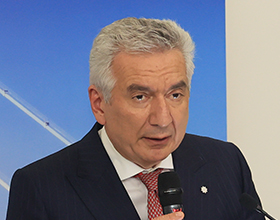
ICI Chairperson Erdal Bahçıvan
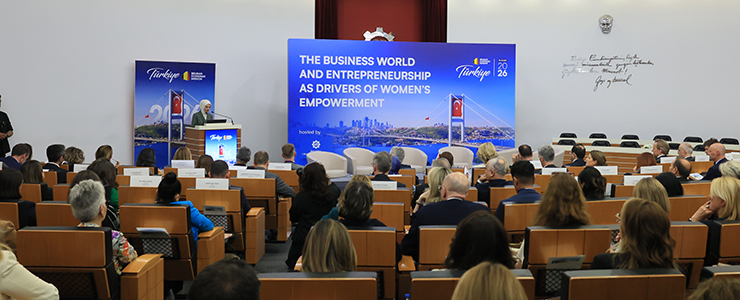
ICI Chairperson Erdal Bahçıvan also gave an opening speech at this meaningful event and expressed their great honor and joy at hosting Queen Mathilde of Belgium at the Istanbul Chamber of Industry. Bahçıvan stated that this gathering represents an important step in the joint efforts to support women’s entrepreneurship carried out in collaboration with the Ministry of Family and Social Services.
Noting that increasing uncertainties in the global economic environment have made strong partnerships and corporate relationships even more important, Bahçıvan continued:
“The global economic environment is becoming increasingly uncertain due to significant geopolitical developments. Economic decisions are now shaped not only by market conditions but also by factors such as resilience, predictability, and trust. As supply chains, investment priorities, and business strategies continue to evolve, long-standing partnerships and strong corporate relationships are becoming even more valuable. The global economic environment is becoming increasingly uncertain due to significant geopolitical developments. Economic decisions are now shaped not only by market conditions but also by factors such as resilience, predictability, and trust. As supply chains, investment priorities, and business strategies continue to evolve, long-standing partnerships and strong corporate relationships are becoming even more valuable.
“The war in the Middle East and the recent pandemic have shown to the entire world just how important secure and sustainable supply chains are. Türkiye has once again demonstrated that it is one of Europe’s most reliable economic partners with its robust and sustainable production infrastructure. In this context, the relationship between Türkiye and the European Union must now be redefined not merely on technical issues but on the basis of a shared vision for the future. We hope that a concrete roadmap will be prepared as soon as possible for Türkiye’s European Union accession process, starting with the modernization of the Customs Union. In this process, I would like to particularly emphasize that the support of Belgium, which is at the very heart of the European Union, is very important and significant.”
Bahçıvan highlighted the importance of the role women play in production, entrepreneurship, leadership, and decision-making processes for the future of industry, and continued:
“As the Istanbul Chamber of Industry, we aim to enhance our industry’s production capacity. In line with this goal, we are adopting a ‘sustainable production’ approach and positioning sustainability as one of our top priorities. In this context, the empowerment of women is not merely a social issue, but also as a matter directly linked to economic strength, corporate capacity, inclusive growth, and long-term competitiveness. Increasing women’s roles in production, entrepreneurship, leadership, and decision-making processes is of critical importance for countries to realize their economic potential. In this regard, we view women as our greatest strength in the development of Türkiye’s manufacturing and exports.” We welcome and support the growing role of women in our industry. Undoubtedly, international dialogue and cooperation are of great importance for the empowerment of women worldwide. Belgium’s experience in promoting inclusive growth, supporting innovation, and empowering women in the business world offers a valuable perspective.”
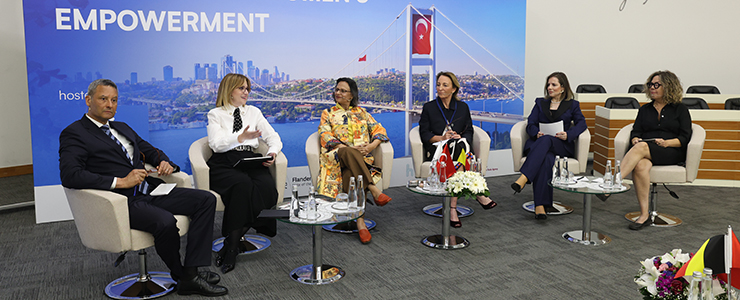
Following the opening remarks, the event continued with a panel moderated by William Massolin, Head of the Council of Europe Office in Türkiye. Panelists addressed the challenges and opportunities related to more effectively integrating women into the business world and the workforce. The panel emphasized that gender equality is not only a social necessity but also a key driver of economic resilience and innovation.
Later, Neslihan Nigiz Ulak, Vice President and Chair of La Lorraine Türkiye and the Middle East, and Chair of the LEAD Network Türkiye; Duygu Yalnızoğlu, General Manager of the Anatolia Technology Research Park (ATAP); and Bedriye Hülya, founder of B-Fit, shared their firsthand experiences in this field in Türkiye. The speakers highlighted how women entrepreneurs and leaders can actively transform business ecosystems. Ms. Michèle Sioen, CEO of Sioen Industries, offered an inspiring perspective from Belgium; while Ms. Mariam A. Khan, UNFPA Representative in Türkiye and Country Director for Azerbaijan and Georgia, presented the key findings of UNFPA’s recent study on this topic in Türkiye.
Thanks were extended to all speakers for their inspiring contributions, to the Council of Europe for moderating the panel, and to the Istanbul Chamber of Industry for hosting this important exchange of ideas. This special gathering, hosted by the ICI, once again demonstrated that the business world and entrepreneurship are powerful engines for women’s empowerment and economic growth.